How Are Carbon Credits Traded?
Pending Issuance Units, Woodland Carbon Units and Peatland Carbon Units can be sold on the open market and are together generally referred to as carbon credits.
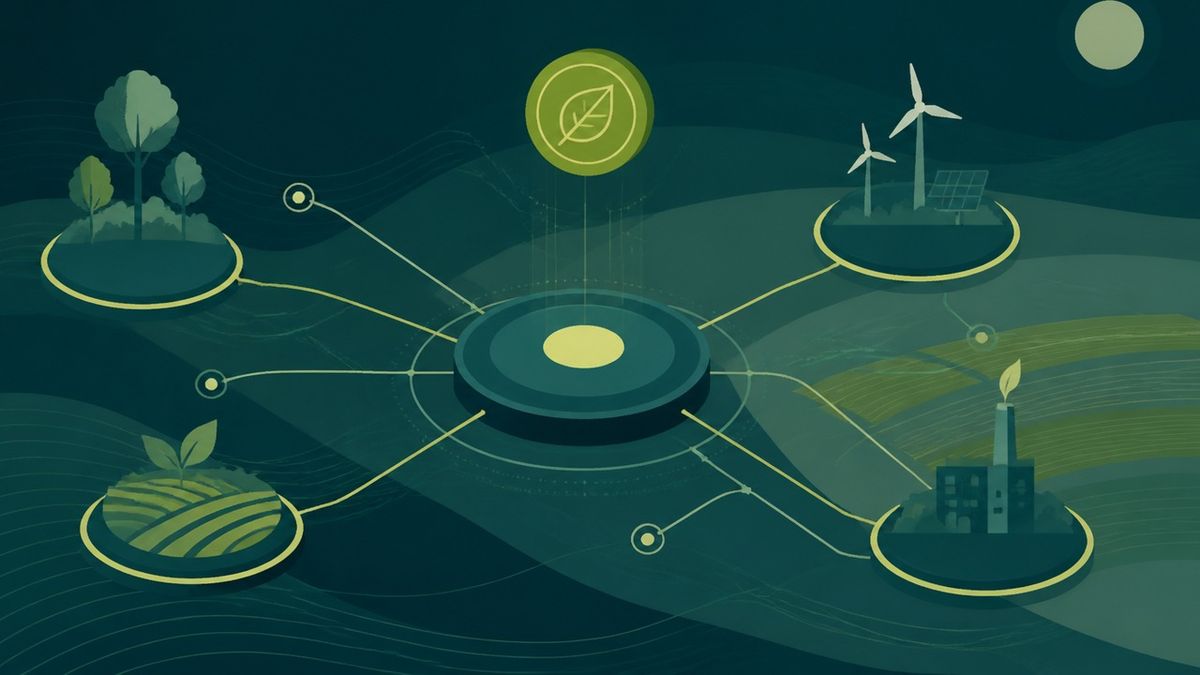
Pending Issuance Units, Woodland Carbon Units and Peatland Carbon Units can be sold on the open market and are together generally referred to as carbon credits (1). To be eligible to bid in UKA auctions, entities will need to hold an account in the UK Emissions Trading Registry and be one of the listed types, including a UK ETS operator or a UK ETS aircraft operator (2). Before buying, you should only deal with financial services firms that are authorised by the FCA, and you can use the FCA Firm Checker to find out if a firm is authorised and has permission for the service it is offering you (3).
How does a carbon credit move from issuance to sale and retirement?
Landowners develop either woodland or peatland carbon projects, which are validated by an accredited body and registered on the UK Land Carbon Registry (1). At that stage the landowner is entitled to Pending Issuance Units (PIUs), which are listed on the registry but cannot yet be used to offset emissions.
PIUs are converted once the project has been verified, usually five years after it starts (1). They become Woodland Carbon Units (WCUs) for trees that have removed a tonne of CO2e from the atmosphere, or Peatland Carbon Units (PCUs) for a tonne of CO2e prevented from being emitted by peatland restoration.
According to HM Revenue & Customs, once a project has been verified, usually 5 years after the start of the project, Pending Issuance Units are converted to Woodland Carbon Units or Peatland Carbon Units accordingly (1).
PIUs, WCUs and PCUs can all be sold on the open market, and the buyers are often companies with regulatory or other offsetting requirements, though traders and philanthropic buyers also purchase them (1). Buyers of verified credits normally retire them when they offset or give, which cancels them. If you buy PIUs, you must wait until they are verified as WCUs or PCUs before you can use them to offset emissions and retire them.
Stages of a UK woodland or peatland carbon credit from project to retirement
Stage | What happens |
|---|---|
Validation and registration | The landowner develops a woodland or peatland project, which an accredited body validates and which is registered on the UK Land Carbon Registry. |
Pending Issuance Units (PIUs) | The landowner is entitled to PIUs, which are listed on the registry; PIUs cannot be used to offset carbon emissions. |
Verification | Usually 5 years after the project starts, PIUs convert to Woodland Carbon Units (one tonne of CO2e removed) or Peatland Carbon Units (one tonne of CO2e prevented). |
Sale | PIUs, WCUs and PCUs can be sold on the open market to entities with offsetting requirements, traders or philanthropic buyers. |
Retirement | Buyers of verified credits normally retire (cancel) them when offsetting or giving; PIU buyers must wait for verification first. |
How are UK ETS allowances traded, and how is the price set?
The UK Emissions Trading Scheme is a cap-and-trade scheme: the cap on certain greenhouse gases falls over time, and operators must surrender allowances each year to cover their emissions (4). Auctioning is the primary means of introducing allowances into the market (2).
Market participants need to be registered with ICE Futures Europe to take part in UKA auctions (2). The Registry records the UK allowances held in the holding accounts of scheme participants, as well as trading accounts and government accounts, and the movement of allowances between accounts (4).
The auction clearing price is the price of the bid at which the sum of the volumes bid matches or exceeds the volume of allowances auctioned (2). According to the Department for Energy Security & Net Zero, the UK ETS currently has an Auction Reserve Price of £28, which will increase to £29.01 in 2027 due to a yearly, inflation-based adjustment. Bids below the reserve price fail, so it sets a floor on what buyers pay.
ICE Futures Europe hosts a secondary market for UKA derivatives (2). UK ETS trading accounts are available for the holding and trading of UKAs as an activity unrelated to UK ETS compliance, and trading accounts cannot be used for UK ETS compliance (4). Holding accounts in the Registry can also be used to trade allowances (UKAs) in the UK ETS markets. The UK Emissions Trading Registry operates in a similar way to an online bank account, holding UK allowances in a secure web-based application.
UK emissions allowances are classed as 'financial instruments' under the Recognised Auction Platforms (Amendment and Miscellaneous Provisions) Regulations 2021, which gave the Financial Conduct Authority a market and auction oversight role in the scheme (2). Once allowances have been released through auctions and free allocation, they can be traded on the UK ETS secondary market.
Are carbon credits regulated in the UK, and what should I check before buying?
Carbon credits are not currently regulated by the Financial Conduct Authority, so you do not gain access to the Financial Services Compensation Scheme or the Financial Ombudsman Service if something goes wrong (3). That remains true even when an FCA-authorised firm acts as custodian or nominee for the credits.
Certification of carbon credits and VERs is voluntary and involves a range of bodies with different quality standards, none of which is recognised by any UK compensation scheme (3). Most projects are based overseas, so UK authorities cannot control their quality or validity.
Before you buy, deal only with firms authorised by the FCA and check them on the FCA Firm Checker (3). According to the Financial Conduct Authority, if you can't find a firm on the Firm Checker, you can contact it on 0800 111 6768. Always be wary if you are contacted out of the blue, pressured to invest quickly or promised returns that sound too good to be true. Some investors have reported that they could not sell or trade their credits and lost the money they invested. Your business should seriously consider getting financial advice or guidance before investing in carbon credits.
Separately, according to the Financial Conduct Authority, its anti-greenwashing rule was introduced as part of the broader SDR and investment labels regime and came into force on 31 May 2024 (5). The FCA's anti-greenwashing rule requires that all sustainability-related claims be fair, clear and not misleading.
How does HMRC treat carbon credits I buy, hold or sell for tax?
If your business is the end user and retires the credits to offset its emissions, HMRC treats the retirement as the end of the credits, and spending on them for the purposes of a trade is ordinarily an allowable deduction in computing trading profits (1). The credits are no longer held once they are retired.
If credits bought for the purposes of a trade are sold before they are retired, HMRC's technical note says the sale receipts should be brought into account for tax purposes as income of the trade (1).
Carbon credits may be accounted for as intangible assets under generally accepted accounting practice (1). In that case they are unlikely to fall within the special regime for the taxation of intangibles provided by Part 8 CTA 2009 unless they meet the definition of an intangible fixed asset; see guidance at CIRD11170.
Sources
- Technical note on ecosystem services, HM Revenue & Customs, 14 May 2026
- Taking part in the UK Emissions Trading Scheme markets, Department for Energy Security & Net Zero, 2022-02-18T17:15:05.000Z
- Carbon credit trading scams / FCA, Financial Conduct Authority, 10/08/2017
- Participating in the UK ETS - GOV.UK, Department for Energy Security & Net Zero, updated 1 July 2026
- Climate change and sustainable finance / FCA, Financial Conduct Authority, 17/04/2021